Ashitaba Font: Sweet Handwritten Style for Business Branding
Elevating Product Packaging with Ashitaba Script Handwritten Fonts
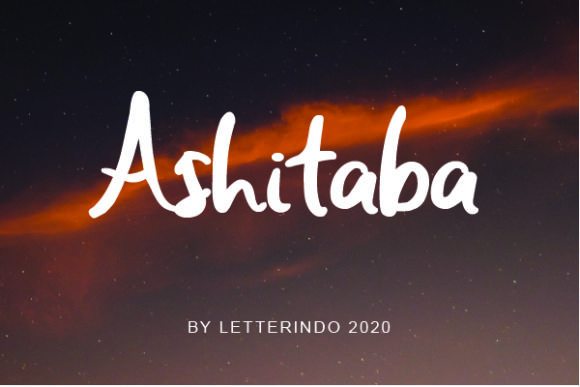
Ashitaba is a lovely and sweet handwritten font that serves as an exceptional choice for small business owners looking to refine their product packaging and physical branding materials. When you are selling handmade goods, artisanal foods, or boutique beauty products, the typography on your label is often the first tactile interaction a customer has with your brand. Ashitaba maintains its classy calligraphic influences while feeling contemporary and incredibly friendly, making it ideal for creating labels that feel personal rather than mass-produced. For entrepreneurs in the candle, soap, bakery, or stationery niches, this specific script handwritten style bridges the gap between luxury and approachability.
Using Ashitaba on product labels helps establish immediate trust because it mimics the care of hand-lettering without sacrificing the consistency required for professional retail standards. Unlike rigid display fonts that can feel cold, or messy scribbles that lack legibility, Ashitaba offers a balanced aesthetic that reads clearly on small surfaces like jar lids, cosmetic tubes, and hang tags. When designing packaging, consider using this typeface for the primary product name or flavor variant to draw the eye, while reserving simpler sans serif fonts for regulatory text and ingredients. This hierarchy ensures your branding remains compliant and readable while still capturing that signature sweet personality that makes customers fall in love with Ashitaba and bring your projects to life.
Ashitaba for Social Media Graphics and Digital Marketing Content
Ashitaba and other expressive fonts are vital tools for stopping the scroll on platforms like Instagram, Pinterest, and TikTok where visual warmth drives engagement. As a business owner managing your own content creation, you need typefaces that convey emotion instantly within a thumbnail-sized space. The contemporary flow of Ashitaba works beautifully for quote cards, promotional announcements, and story highlights because its calligraphic roots suggest authenticity and human connection. In an era of AI-generated captions and sterile corporate graphics, using a genuine script handwritten font signals to your audience that there is a real person behind the brand.
When incorporating Ashitaba into social media templates, readability on mobile devices must be your priority. While the font is undeniably lovely, intricate swashes can sometimes get lost against busy photographic backgrounds. To maintain professionalism, place Ashitaba headlines over solid color blocks, negative space in photos, or subtle textured overlays. This ensures the sweet, handwritten aesthetic remains crisp and accessible to all viewers. For service-based entrepreneurs like coaches, photographers, or wedding planners, this font pairs exceptionally well with lifestyle imagery to create a cohesive feed that feels both high-end and welcoming. Remember to test your graphics at actual mobile size before posting to ensure the delicate strokes of the font do not pixelate or disappear.
Building Trustworthy Brand Identity with Ashitaba Typeface Design
Fall in love with Ashitaba and bring your projects a consistent visual voice that translates across business cards, website headers, and email newsletters. Consistency is the cornerstone of brand recognition for small businesses, and selecting a versatile script handwritten font like Ashitaba allows you to maintain a unified theme without your design assets looking repetitive. The font’s unique ability to remain classy yet friendly means it can adapt to various touchpoints; it looks elegant on a formal wedding invitation suite but equally appropriate on a casual café menu or a thank-you card included in an e-commerce shipment. This versatility saves business owners money by reducing the need to purchase multiple decorative fonts for different campaigns.
However, building a trustworthy identity requires more than just picking a pretty font; it requires strategic application. Use Ashitaba as your primary display font for logos and major headings, but avoid using it for body copy or long-form text. Overusing any decorative typeface can fatigue the reader and diminish the perceived value of your content. Instead, let Ashitaba serve as the accent that guides the customer’s emotional journey, reinforcing your brand’s personality at key decision points. When customers see this familiar, sweet lettering across your website banner, packaging, and social ads, they subconsciously register your business as established, intentional, and reliable.
Effective Font Pairing Strategies for Ashitaba in Commercial Projects
Ashitaba is a lovely and sweet handwritten font that demands careful pairing with complementary typefaces to function effectively in commercial design environments. To achieve a polished, professional look, pair this expressive script with a clean, geometric sans serif or a structured serif font. The contrast between the organic, flowing lines of Ashitaba and the stability of a neutral supporting font creates visual tension that keeps designs interesting and legible. For example, a skincare brand might use Ashitaba for the product line name and a minimalist sans serif for the tagline and benefits list, ensuring the packaging communicates both luxury and clarity.
Small business owners should also consider weight and spacing when creating these pairings. Because Ashitaba has inherent calligraphic variation, it pairs best with supporting fonts that have uniform stroke widths and generous x-heights. Avoid pairing it with other ornate scripts or highly stylized display fonts, as this creates visual competition that confuses the hierarchy. When designing for print materials like flyers or brochures, ensure there is adequate white space around the Ashitaba text elements to let the letterforms breathe. This negative space enhances the premium feel of the design and prevents the layout from appearing cluttered. Testing these combinations in grayscale before adding color can help you verify that the hierarchy holds up based solely on typographic contrast.
Navigating Commercial Licensing for Ashitaba Fonts in Business
Before integrating Ashitaba or any script handwritten fonts into your revenue-generating activities, verifying commercial licensing is a non-negotiable step for protecting your business. Many entrepreneurs mistakenly assume that purchasing or downloading a font grants universal usage rights, but licenses vary significantly between personal use, desktop commercial use, web embedding, and merchandise production. If you plan to use Ashitaba on products intended for resale, such as printed mugs, t-shirts, or digital templates, you likely require a specific extended license. Failing to secure the correct permissions can lead to legal issues and damage the reputation you have worked hard to build.
Treat font licensing as a standard business expense similar to software subscriptions or inventory costs. Review the End User License Agreement (EULA) provided by the type foundry or marketplace where you acquired Ashitaba. Pay close attention to clauses regarding logo trademarking, as some licenses prohibit registering a logo set entirely in a specific font as a trademark. Additionally, if you hire a freelance designer or agency to create your branding, confirm that they have transferred the appropriate commercial license to your business entity. By handling these administrative details proactively, you ensure that your use of Ashitaba remains sustainable and secure as your company scales. This diligence reflects the same level of care and professionalism that the font itself brings to your visual identity, completing the circle of trustworthy business practice.